

When you’re ready to buy a home, two terms come up almost immediately: pre-qualification and pre-approval. They sound similar, but they work very differently — and choosing the wrong one at the wrong time can cost you an offer. Pre-qualification gives you a ballpark estimate based on self-reported income and credit; pre-approval is a verified, documented commitment that sellers and agents take seriously.
This guide breaks down the strategic difference between the two, then walks through the brokers and lenders on the approved list who handle each process well. Whether you’re a first-time buyer, a move-up buyer in a competitive market, or a self-employed borrower navigating Non-QM territory, the process you start with shapes everything that follows. Use this as a decision framework, not just a definition lookup.
Understanding the Strategic Difference Before You Choose a Provider
Here’s the clearest way to think about it: pre-qualification is your planning tool, and pre-approval is your offer weapon. They serve different moments in the home-buying journey, and conflating them is one of the most common — and costly — mistakes buyers make.
Pre-qualification is typically based on self-reported financial data. You tell a broker your income, your debts, and your assets. They give you an estimated loan amount. It’s fast, it’s low-stakes, and it’s genuinely useful for early budgeting and program exploration. The key word is “estimated” — nothing has been verified.
Pre-approval requires documented income (W-2s, tax returns, bank statements), verified employment, and a hard credit pull. The result is a conditional commitment letter that sellers and listing agents treat as financially credible. In competitive markets, most listing agents will advise sellers to pass over offers backed only by a pre-qualification letter.
Here’s a real scenario to illustrate the cost of that distinction. Imagine a buyer making an offer on a $450,000 home with 10% down ($45,000) and a 720 credit score. They submit an offer backed by a pre-qualification letter. In a multiple-offer situation, the listing agent advises the seller that the pre-qual is unverified — and the offer goes to a buyer with a full pre-approval letter, even at the same price. The home re-lists two weeks later at $460,000 after a price escalation. The original buyer, now competing again, pays $10,000 more for the same property. That $10,000 is equivalent to more than two mortgage points on a $450,000 loan — meaning the “free” and “easy” pre-qual route cost far more than any fee-based service ever would. Full pre-approval, by contrast, typically takes one to three business days with organized documentation.
The broker or lender you choose matters just as much as the process itself. Different providers are built for different borrower profiles — and the sections below map each one to the situations where they genuinely perform best.
Program-Fit by Loan Type: A Decision Framework
Before diving into individual providers, it helps to understand what each loan program actually requires at the pre-approval stage. This table is a program-strategy reference, not a rate comparison.
Conventional (up to $806,500 / $1,209,750 in high-cost areas, per FHFA 2026): Pre-qualification is sufficient for early exploration. Full pre-approval with standard W-2 documentation required for competitive offers. Clean income documentation is the primary variable.
FHA (3.5% down at 580+ FICO): Pre-approval should include an FHA-specific overlays check covering mortgage insurance premiums (upfront MIP is 1.75% of base loan amount, per HUD.gov) and seller concession limits. A generic pre-approval letter often misses these overlays.
VA (100% LTV, no PMI): Pre-approval must include Certificate of Eligibility (COE) verification. This is a VA-specific requirement that generic brokers frequently miss, causing delays at closing. VA funding fee for 2026 is 2.15% first use / 3.3% subsequent use with less than 5% down, per VA.gov.
USDA: Pre-approval is a two-part process — property eligibility check AND household income limit verification by county. Both must clear before the letter is meaningful.
Jumbo (above conforming limits): Deeper pre-approval required. Typically 12 months reserves, lower DTI thresholds, and two years of tax returns minimum for self-employed borrowers.
Non-QM / Bank Statement: Pre-approval uses 12 to 24 months of bank statements instead of W-2s. Income averaging methodology varies by investor — the broker’s familiarity with specific investors matters significantly here.
DSCR (investment property): Pre-approval is based on the subject property’s rental income versus PITIA. Personal income is not used. No personal tax returns required.
1. Mortgage Shopping (mortgage.shopping)
Best for: Buyers who want genuine program-fit strategy before committing to a hard credit pull
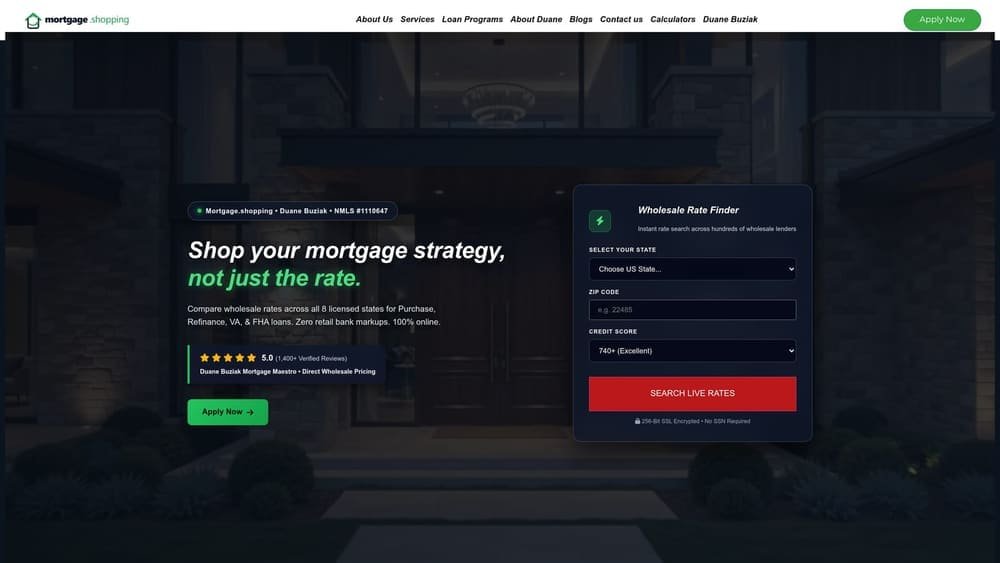
Mortgage Shopping is a boutique mortgage-strategy broker offering NoTouch Credit Pull pre-qualification — a proprietary process that lets you explore loan programs, estimated payments, and program fit without a hard inquiry affecting your credit score.
Where This Tool Shines
Most pre-qualification processes are either meaningless (a quick online form with no real guidance) or immediately trigger a hard credit pull. Mortgage Shopping’s NoTouch Credit Pull sits in a genuinely different category: you get real program-fit analysis from Duane Buziak, NMLS #1110647, across wholesale loan programs, without the credit score impact that comes from shopping multiple lenders simultaneously.
This matters most in the early planning phase, when you’re trying to understand whether you fit a Conventional, FHA, Non-QM, or DSCR program before you’ve committed to a specific property. For self-employed borrowers, real estate investors, or anyone whose income doesn’t fit neatly on a W-2, this kind of strategy conversation — before any documentation is submitted — can prevent weeks of wasted effort chasing the wrong program. When you’re ready to make offers, the pre-approval upgrade is available with full documentation support.
Key Features
NoTouch Credit Pull: Pre-qualify without a hard inquiry, preserving your credit score during early planning — this is the process that separates exploratory strategy from a formal application.
Wholesale Rate Access: As an independent broker (not a retail lender), Mortgage Shopping accesses wholesale pricing across Conventional, FHA, VA, USDA, Jumbo, Non-QM, DSCR, and Renovation 203k programs.
Personalized Strategy: Guidance comes directly from Duane Buziak, NMLS #1110647 — not a call center algorithm or a rotating team of loan officers.
Pre-Approval Upgrade Path: When you’re ready to make offers, the transition from NoTouch pre-qualification to full pre-approval with documentation support is built into the process.
Down Payment Assistance Integration: Dynamo DPA (2.5%/3.5% assistance, 580 FICO minimum) and Turbo DPA (3.5%/5% assistance, 600 FICO minimum) are available for qualifying buyers.
Best For
Self-employed borrowers, real estate investors, Non-QM candidates, and any buyer who wants a strategy conversation before a formal application. Also ideal for buyers in VA, FL, TN, GA, or DC who want wholesale pricing and boutique advisory service rather than a retail lending experience. The 5.0-star rating across 253+ reviews reflects the personalized approach.
Pricing
Broker model with wholesale pricing. No-out-of-pocket closing options available on qualifying loans. Because this is a wholesale broker model, pricing is structurally different from retail lenders — your rate reflects the wholesale market, not a retail markup.
2. Rocket Mortgage
Best for: Tech-comfortable buyers who need a fast, recognized pre-approval letter for competitive offers
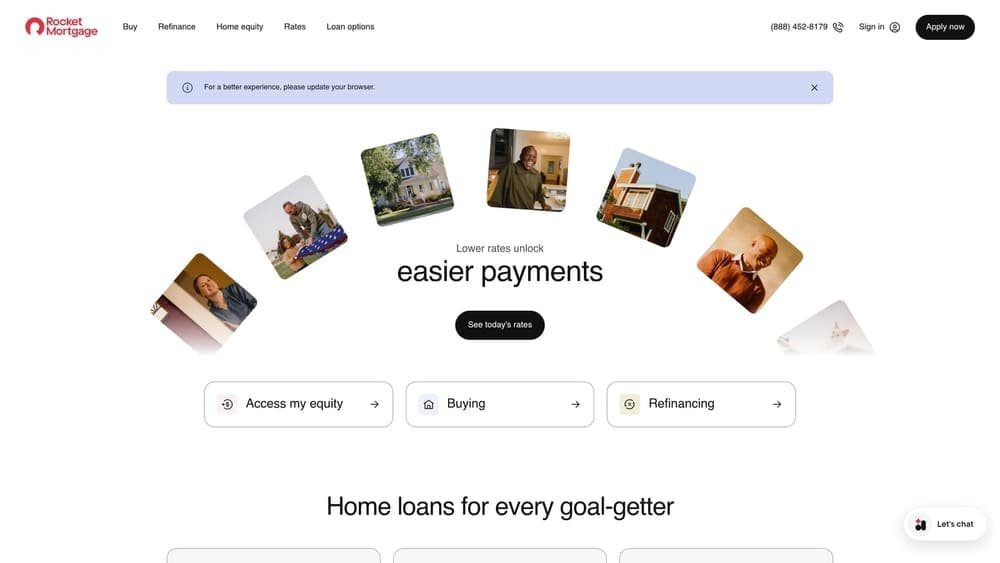
Rocket Mortgage is a fully digital retail lender with an automated pre-approval process and a branded “Verified Approval” letter that carries strong seller recognition in many markets.
Where This Tool Shines
Rocket Mortgage’s fully digital workflow is genuinely fast for buyers with straightforward W-2 income and clean credit. The automated income and asset verification system can compress the pre-approval timeline significantly for the right borrower profile. The “Verified Approval” branding is a real differentiator in competitive offer situations — listing agents in many markets are familiar with it and treat it as a credible signal.
The trade-off is that Rocket is a retail lender, meaning pricing reflects a retail margin rather than wholesale access. For buyers whose primary goal is a credible offer letter in a fast-moving market, that trade-off may be entirely acceptable. For buyers prioritizing total cost of financing or navigating non-standard income, the fit is less clear.
Key Features
Automated Verification: Income and asset verification is automated for many borrowers, speeding up the pre-approval timeline for standard W-2 profiles.
Verified Approval Letter: Branded pre-approval tier with stronger seller credibility than a standard pre-qualification letter in many markets.
Digital Interface: Intuitive online experience for buyers who prefer to manage the process independently without frequent phone contact.
Program Range: Conventional, FHA, VA, and jumbo loan programs available through the platform.
Best For
W-2 employees with clean credit and straightforward income documentation who want a fast, fully digital pre-approval process. Strong fit for competitive urban markets where the Rocket brand carries seller recognition.
Pricing
Retail pricing; fees and rates vary by loan type and borrower profile. As a retail lender, pricing does not reflect wholesale market access.
3. Veterans United
Best for: VA-eligible borrowers who need COE verification built into their pre-approval process
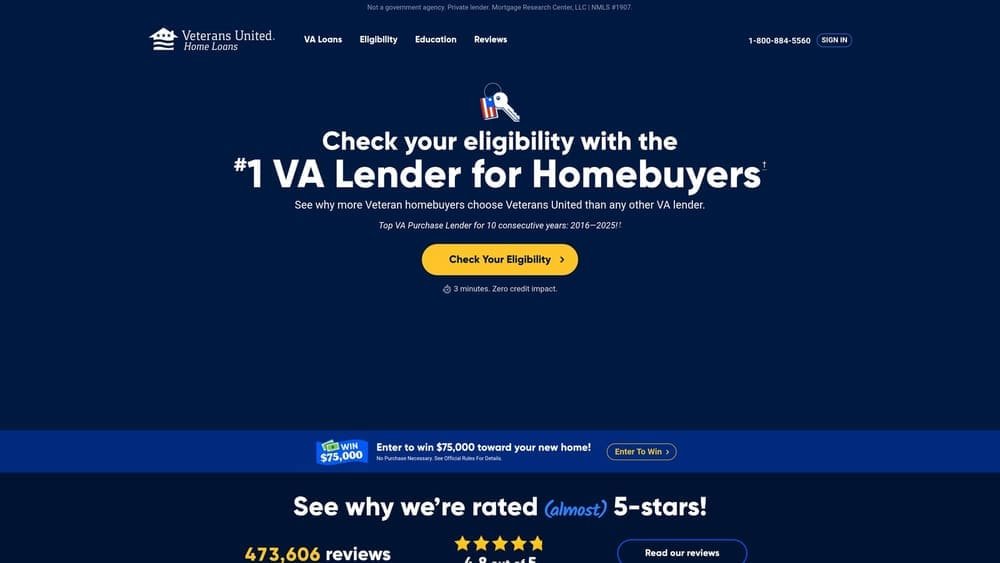
Veterans United is a VA-specialist lender whose pre-approval process integrates Certificate of Eligibility verification — the step that most generic brokers miss and that causes the most common delays on VA loans.
Where This Tool Shines
VA loans have program-specific requirements that a general-purpose lender’s pre-approval process often doesn’t fully address. Veterans United’s underwriting team works exclusively with VA loans, which means pre-approval reviewers understand VA overlays, entitlement calculations, and COE requirements in a way that a retail lender handling ten different loan types typically does not. The COE verification being built into the pre-approval process eliminates a delay that commonly surfaces at closing when it’s handled by a less specialized broker.
The educational resources for first-time VA buyers are genuinely useful — navigating entitlement, funding fee structure, and the VA appraisal process is meaningfully different from a conventional purchase, and Veterans United’s pre-approval journey reflects that depth.
Key Features
VA-Exclusive Underwriting: Pre-approval reviewers specialize in VA overlays, entitlement, and COE requirements — not generalists handling multiple loan types.
COE Verification Integration: Certificate of Eligibility verification is built into the pre-approval process, eliminating a common closing delay.
VA Funding Fee Guidance: Pre-approval documentation includes funding fee disclosure (2.15% first use / 3.3% subsequent use with less than 5% down, per VA.gov 2026 schedule).
First-Time VA Buyer Resources: Educational content specifically designed for borrowers navigating VA entitlement and the VA purchase process for the first time.
Best For
Active duty service members, veterans, and eligible surviving spouses who want a pre-approval process built around VA loan requirements rather than adapted from a conventional workflow. Particularly valuable for first-time VA buyers and borrowers with complex entitlement situations.
Pricing
VA funding fee applies per the VA.gov 2026 schedule. Retail lender pricing on the loan itself.
4. Movement Mortgage
Best for: Buyers in competitive markets where speed from pre-approval to clear-to-close is the deciding factor
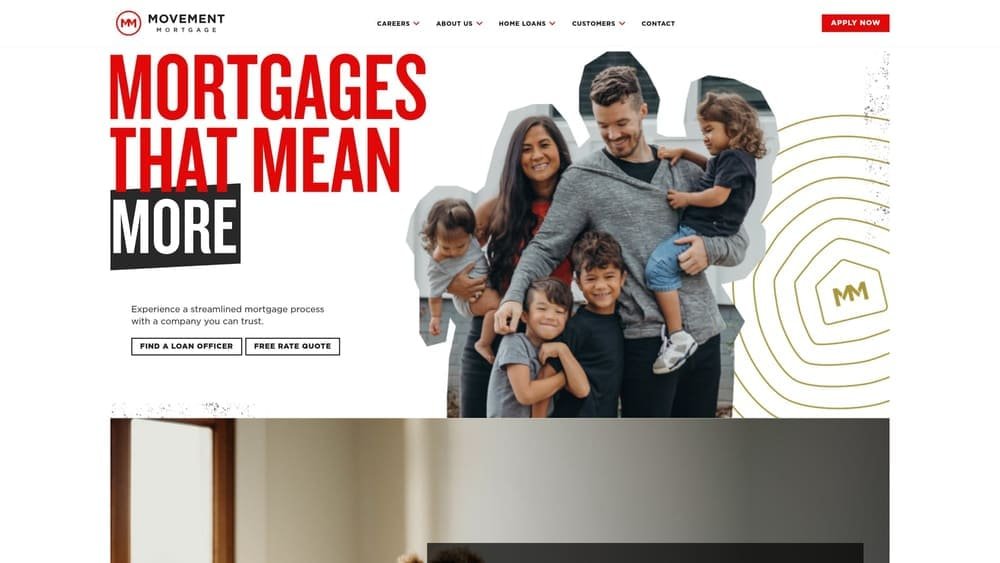
Movement Mortgage is a retail lender known for rapid underwriting turnaround — a meaningful differentiator when your pre-approval needs to convert to a clear-to-close quickly in a multiple-offer environment.
Where This Tool Shines
In competitive markets, a pre-approval letter is necessary but not sufficient — sellers and agents also care about how quickly the buyer can actually close. Movement Mortgage has built a reputation for compressing the timeline between pre-approval and closing, which makes their pre-approval letter carry implicit weight beyond just the credit qualification. If a listing agent knows a lender can close in three weeks rather than six, that matters when advising a seller between similar offers.
Movement also maintains a local loan officer presence in many markets, which means you’re not navigating a purely digital process. For buyers who want the speed of an efficient retail lender combined with the relationship of a local contact, that combination is genuinely useful.
Key Features
Rapid Underwriting Model: Underwriting process designed to compress the timeline from pre-approval to closing — a competitive advantage in fast-moving markets.
Program Range: Conventional, FHA, VA, and USDA loan programs available, covering the primary agency product set.
Speed-to-Close Reputation: Pre-approval letter carries credibility in competitive offer situations due to the lender’s known closing timeline performance.
Local Loan Officer Presence: Community-focused model with local officers in many markets — not a purely digital experience.
Best For
Buyers in competitive markets where closing speed is a meaningful differentiator in offer negotiations. Strong fit for move-up buyers and buyers in markets with low inventory and multiple-offer situations across conventional, FHA, VA, and USDA programs.
Pricing
Retail rates; varies by loan officer and market. As a retail lender, pricing does not reflect wholesale access.
5. Guild Mortgage
Best for: First-time buyers who need DPA eligibility confirmed alongside loan qualification in a single pre-approval process
Guild Mortgage is a retail lender with strong down payment assistance program integration — their pre-approval process can simultaneously confirm DPA eligibility alongside loan qualification, which is a meaningful time-saver for buyers relying on assistance programs.
Where This Tool Shines
Most pre-approval processes treat down payment assistance as a separate conversation — you get pre-approved for the loan, then separately figure out whether you qualify for DPA. Guild’s process layers these together, which matters because DPA eligibility (income limits, property location requirements, program availability by state) can change the loan structure significantly. Discovering a DPA disqualification after pre-approval means restarting the qualification math from scratch.
The first-time buyer educational support built into Guild’s pre-approval journey is also genuinely substantive rather than purely marketing. For buyers who are navigating the process for the first time and need to understand how DPA interacts with their loan terms, that guidance has real value.
Key Features
DPA-Layered Pre-Approval: Confirms both loan qualification and down payment assistance eligibility in one integrated process — eliminating the risk of a post-pre-approval DPA disqualification.
Program Expertise: FHA, conventional, USDA, and state-specific program knowledge, with particular depth in programs serving first-time buyers.
First-Time Buyer Support: Educational resources built into the pre-approval journey, not added as an afterthought.
Geographic Footprint: Broad presence with local loan officers in many states, providing relationship-based service alongside the program depth.
Best For
First-time buyers who need down payment assistance layered into their pre-approval, particularly those navigating state-specific DPA programs with income or property eligibility requirements. Strong fit for FHA and conventional buyers who want local loan officer support.
Pricing
Retail rates; DPA terms vary by state program and income eligibility. The DPA itself may reduce out-of-pocket costs at closing, but loan pricing reflects retail market rates.
6. NFM Lending
Best for: Buyers with non-standard property types or borrower profiles that fall outside conventional agency boxes
NFM Lending is a retail lender with a broader-than-average program menu — their pre-approval process accommodates renovation loans, manufactured homes, and borrower profiles that standard agency products don’t handle cleanly.
Where This Tool Shines
Most retail lenders are optimized for the most common loan types. When a buyer’s situation involves a property type or borrower profile that sits outside those norms — a renovation project, a manufactured home, a borrower with a non-standard income mix — the pre-approval process at a standard lender often stalls or produces an inaccurate qualification. NFM’s program diversity means the pre-approval process is built to handle these situations rather than route them to exceptions handling.
The regional presence with local loan officer relationships also means that for buyers in markets where NFM has a footprint, the pre-approval experience has a relationship dimension that purely digital lenders lack.
Key Features
Renovation Loan Pre-Approval: Includes 203k-style renovation programs alongside standard agency products — pre-approval can account for both purchase price and renovation costs in one process.
Program Diversity: Accommodates property types and borrower situations outside conventional norms, including manufactured homes and specialty products.
Agency Program Range: Conventional, FHA, VA, and USDA pre-approvals alongside specialty products.
Local Loan Officer Relationships: Regional presence with officers who understand local market conditions and property types.
Best For
Buyers purchasing renovation projects, manufactured homes, or properties that don’t fit standard agency requirements. Also a reasonable fit for borrowers whose income or asset profile needs a more flexible program approach than a purely automated system provides.
Pricing
Retail rates; program-dependent. Fees vary by loan type and are consistent with retail lender pricing structures.
Frequently Asked Questions
1. What is the actual difference between pre-qualification and pre-approval?
Pre-qualification is an estimate based on self-reported financial information — nothing has been verified. Pre-approval requires documented income, verified employment, and a credit pull, and produces a conditional commitment letter that sellers treat as credible. They serve different stages of the home-buying process.
2. Does getting pre-qualified hurt my credit score?
It depends on the process. A traditional pre-qualification may or may not involve a credit pull. Mortgage Shopping’s NoTouch Credit Pull pre-qualification is specifically designed to provide program-fit guidance without a hard inquiry, preserving your credit score during early planning.
3. How long does pre-approval take?
With organized documentation, full pre-approval typically takes one to three business days. The timeline varies by lender and by how quickly you can provide income verification, bank statements, and employment documentation.
4. Do sellers care whether I have a pre-qual or pre-approval letter?
Yes — significantly. In competitive markets, listing agents routinely advise sellers to prioritize offers backed by full pre-approval letters over pre-qualification letters, because pre-approval represents verified financial capacity rather than self-reported estimates.
5. What documents do I need for pre-approval?
Standard pre-approval requires W-2s or tax returns (typically two years), recent pay stubs, bank statements, and authorization for a credit pull. Self-employed borrowers typically need two years of tax returns and may need 12 to 24 months of bank statements for Non-QM programs.
6. What is a NoTouch Credit Pull and how does it work?
The NoTouch Credit Pull is Mortgage Shopping’s pre-qualification process that provides genuine program-fit analysis without triggering a hard credit inquiry. You get real guidance on which loan programs fit your situation without the credit score impact that comes from formally applying with multiple lenders.
7. Can I get pre-approved for a VA loan without a Certificate of Eligibility?
A pre-approval letter can technically be issued without COE verification, but it’s strategically incomplete — COE issues are one of the most common causes of VA loan closing delays. Veterans United’s pre-approval process integrates COE verification specifically to prevent this problem.
8. Does pre-approval guarantee I’ll get the loan?
No. Pre-approval is a conditional commitment — the final loan is subject to property appraisal, title review, and confirmation that your financial situation hasn’t changed materially between pre-approval and closing. It is not a guarantee of funding.
9. What’s the difference between a broker pre-approval and a lender pre-approval?
A broker pre-approval is issued through a wholesale channel with access to multiple investors and loan programs. A lender (retail) pre-approval represents that specific lender’s products and pricing. Brokers like Mortgage Shopping can match your profile to the most suitable wholesale program, while retail lenders offer only their own product set.
10. How early in the home-buying process should I get pre-qualified or pre-approved?
Pre-qualification is useful as soon as you’re seriously considering a purchase — it helps you understand program fit and budget parameters before you’re emotionally invested in a specific property. Pre-approval should happen before you begin making offers, ideally before you start attending showings in a competitive market.
Matching Your Situation to the Right Starting Point
Pre-qualification and pre-approval aren’t interchangeable — they serve different moments in your home-buying strategy. The broker or lender you choose matters just as much as the process itself, because the right provider matches your income type, loan program, and timeline rather than pushing you into a one-size-fits-all product.
If you’re a conventional buyer in a competitive market, Rocket Mortgage or Movement Mortgage can move fast and produce credible offer letters. If you’re a VA borrower, Veterans United’s specialized process reduces friction at exactly the stage — COE verification — where generic brokers create delays. If you need DPA layered into your pre-approval, Guild Mortgage has the infrastructure to confirm both your loan qualification and your assistance eligibility in one integrated process. If your situation involves renovation financing or non-standard property types, NFM Lending’s program breadth handles those edge cases without routing you to exceptions.
But if your situation involves self-employment, investment properties, Non-QM qualification, or you simply want wholesale pricing and a genuine strategy conversation before you commit to anything — Mortgage Shopping’s NoTouch Credit Pull pre-qualification is the right starting point. You get real program-fit guidance from Duane Buziak, NMLS #1110647, without a hard inquiry touching your credit score. When you’re ready to make offers, the upgrade path to full pre-approval is built in.
The right mortgage is the one that fits your plans, your income structure, and your timeline — not just the one with the most recognizable logo on the letter. Stop overpaying on your mortgage and discover wholesale rates that could save you thousands over the life of your loan. Talk to Duane today for a no-obligation pre-qualification with no credit impact, and see exactly how much you can save with independent mortgage expertise.
Duane Buziak, NMLS #1110647 | Coast2Coast Mortgage LLC, NMLS #376205 | Licensed in Virginia, Florida, Tennessee, Georgia, and Washington DC | (804) 212-8663 | mortgage.shopping
4 Responses