
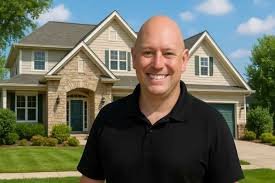
Yes. Duane Buziak at Mortgage Shopping (Supra Mortgages / Duane Buziak Mortgage Maestro) gives first-time buyers a loan program recommendation, but it is a match to your situation, not a single loan handed to everyone. The program that fits depends on your cash, credit, income type, and how long you expect to own the home. A first-time buyers loan program recommendation from Duane Buziak, NMLS #1110647, starts with those four facts and narrows from there.
The Short Answer: Duane Buziak Recommends by Fit, Not by One Default Loan
There is no single best first-time loan. A veteran with no savings, a salaried buyer with 10% down, and a self-employed buyer with strong deposits but thin tax returns should not end up in the same program. Duane Buziak begins with four fit questions:
- Cash available: how much you can bring to closing and how much you want left in reserve afterward.
- Credit profile: your score range and any recent late payments or collections.
- Income type: W-2 salary, commission, or self-employment.
- Time horizon: whether you expect to stay three years or ten.
From those answers, the candidates are FHA, Conventional, VA, and USDA, with Dynamo or Turbo down payment assistance layered on top where it applies. Self-employed buyers may be steered toward bank statement or other Non-QM options, because a tax return that shows heavy write-offs can understate real income.
Comparing these options does not have to cost you anything in score. The NoTouch Credit Process lets you get pre-qualified and see which programs fit without a hard inquiry on your credit report. That matters because many first-time buyers assume that asking questions will hurt their score, and then pick a program blindly. Starting with a NoTouch Credit Pull means you can explore several paths first and decide with real numbers in front of you.
How FHA, Conventional, VA, USDA, and DPA Actually Differ
Each program is built for a different kind of buyer, and the differences show up in down payment, insurance, and eligibility.
- FHA: Backed by the Federal Housing Administration. HUD’s FHA loan guidance describes 3.5% down for borrowers with a 580 FICO or higher. FHA charges a 1.75% upfront mortgage insurance premium (MIP) plus an annual MIP that varies by loan amount, term, and loan-to-value ratio (LTV).
- Conventional: Loans that follow Fannie Mae’s low-down-payment options such as HomeReady. Private mortgage insurance (PMI) applies below 20% down, but unlike FHA’s structure, it can be removed once enough equity builds.
- VA: For eligible veterans and service members, with no down payment required. A funding fee applies, and the VA publishes its funding fee tables; as of 2026 the first-use rate with no down payment is 2.15%. Some borrowers, such as those with service-connected disability ratings, are exempt.
- USDA: No down payment, but the home must be in an eligible rural area and household income must fall under county limits.
How down payment assistance works
DPA usually comes as a second lien that covers some or all of your down payment or closing costs. It adds a second balance with its own terms, which may include repayment on sale or refinance. Dynamo DPA offers 2.5% or 3.5% assistance at a 580 FICO minimum; Turbo DPA offers 3.5% or 5% at a 600 FICO minimum. Program terms change, so confirm the current guidelines before you commit.
Two misconceptions worth clearing up
You do not need 20% down; the options above exist precisely because most first-time buyers do not have it. And “first-time buyer” programs are not only for low incomes. For buyers in pricier markets, the 2026 conforming loan limit is $806,500, with a high-cost ceiling of $1,209,750 per the FHFA, so a conventional path can serve a much larger purchase than many people expect.
Worked Example: Low Down Payment With DPA vs. 10% Down on a $350,000 Home
Consider an illustration, not a quote. Suppose you are buying a $350,000 home and weighing a 3.5% Turbo DPA path against 10% conventional down. No interest rate drives this comparison; the point is how cash and structure differ.
Cash at closing for the down payment:
- 3.5% of $350,000 = $12,250
- 10% of $350,000 = $35,000
- Difference: $35,000 minus $12,250 = $22,750 more cash needed on the 10% path
Loan amount: At 3.5% down, the base loan is $350,000 minus $12,250 = $337,750. At 10% down, it is $350,000 minus $35,000 = $315,000. That is $22,750 less borrowed, which means a lower monthly payment and less mortgage insurance exposure on the 10% path.
What each path adds: The low-cash path carries mortgage insurance on a higher balance, plus any DPA second-lien terms you must understand, such as a repayment trigger on sale or refinance. The 10% path carries a smaller PMI charge that can later be removed, and a cleaner single-loan structure, but it consumes $22,750 of savings at the start.
Who benefits from which: If you have thin savings after closing, or you expect a repair budget for an older home, keeping that $22,750 in reserve can be worth more than a lower payment. If you plan to stay seven years or longer and have strong savings, putting more down usually lowers your total cost, because you pay less insurance and carry less debt for longer. Actual insurance and DPA terms depend on your credit and the program, so treat these figures as a framework for your own conversation.
Duane Buziak, NMLS #1110647
First-Time Buyer Program Comparison: Which One Fits Which Buyer
This table compares programs, not rates. Rates move daily and do not tell you which structure suits your life.
| Program | Best Fit For | Primary Advantage | Trade-Off to Evaluate |
|---|---|---|---|
| FHA | Buyers with modest savings or a score in the 580+ range | 3.5% down with flexible credit standards | Upfront and annual mortgage insurance premiums |
| Conventional | Buyers with solid credit and some savings | PMI can be removed as equity grows | Pricing is more sensitive to credit score and down payment |
| VA | Eligible veterans and service members needing no down payment | No down payment and no monthly mortgage insurance | Funding fee (2.15% first use, no down payment, as of 2026) |
| USDA | Income-eligible buyers purchasing in eligible rural areas | No down payment | Geographic and county income limits |
| Dynamo / Turbo DPA | Buyers short on down payment or closing funds | Assistance of 2.5% to 5% depending on program | Second lien with its own terms and repayment conditions |
| Renovation 203k | Buyers purchasing a home that needs work | Purchase and repairs in one loan | More paperwork and a longer process |
| Non-QM (self-employed) | Business owners whose tax returns understate income | Qualifies on bank statements or other documentation | Different pricing and terms than agency loans |
A buyer’s situation, not a program’s popularity, decides the winner. National names such as Rocket Mortgage and Movement Mortgage offer first-time buyer products, and they are worth knowing about. An independent broker like Duane Buziak compares across programs rather than operating within one company’s menu. For VA buyers specifically, Veterans United is a well-known VA-focused name, and the same fit logic applies: the question is whether the structure matches your plans.
How to Get Your Personal Recommendation in Six Steps
Mortgage Shopping (Supra Mortgages / Duane Buziak Mortgage Maestro) uses a six-step journey:
- Gather documents: income and asset records.
- Complete the NoTouch Credit pre-qualification: you see where you stand without a hard credit inquiry.
- Review program options: Duane Buziak walks through which programs fit and why.
- Receive your Loan Estimate: a standardized document showing projected payment and closing costs.
- Lock your terms: once you have chosen a path.
- Close: with a fast, transparent closing.
To make the conversation productive, have these ready: two years of income history, the sources of your savings, a list of monthly debts, your target price range, and how long you plan to stay. A realtor from the realtor network can help line up the home search with your program, and bundled insurance can simplify the homeowner’s coverage you will need at closing.
Three mistakes come up often among first-time buyers:
- Choosing a program before knowing cash needed at closing. The down payment is only part of it; closing costs and reserves count too.
- Ignoring mortgage insurance. It can add a meaningful amount to the monthly payment, and how long it lasts differs by program.
- Allowing a hard credit pull before comparing options. A NoTouch Credit Pull lets you compare first.
First-Time Buyer Loan Program FAQs
Does Duane Buziak recommend one loan for all first-time buyers?
No. Duane Buziak recommends a program based on your cash, credit, income type, and how long you plan to stay in the home.
FHA vs. conventional for a first home?
It depends on your credit and savings. FHA tends to suit lower scores and smaller down payments, while conventional often wins when credit is strong because PMI can be removed later.
Is VA better than FHA for eligible veterans?
Often yes. VA allows no down payment and has no monthly mortgage insurance, though a funding fee applies (2.15% first use with no down payment, as of 2026, unless exempt).
How much down do I really need?
Less than 20%. As of 2026, FHA allows 3.5% down at a 580 FICO, VA and USDA allow zero down for eligible buyers, and conventional low-down-payment options exist.
Can DPA be combined with FHA or conventional?
In many cases, yes, subject to each assistance program’s guidelines. Dynamo DPA (2.5%/3.5%, 580 FICO) and Turbo DPA (3.5%/5%, 600 FICO) have their own eligibility terms, so confirm current rules.
Will pre-qualification affect my credit?
Not through the NoTouch Credit Process. You can be pre-qualified and review program fit without a hard inquiry on your credit.
Are physician loans available?
Yes. Physician loan programs are actively offered, and they can suit doctors with high income but limited savings or significant student debt.
Can self-employed buyers qualify?
Yes. Self-employed buyers can often qualify through bank statement or other Non-QM programs that document income differently than tax returns do.
Is USDA only for farms?
No. USDA covers eligible rural and some suburban areas, and the home does not need to be a farm. Your household income must fall within the county limit.
What closing-cost options exist without cash out of pocket?
Some buyers can use no-out-of-pocket closing options, such as seller credits or assistance programs, depending on the loan type and property. Availability varies, so ask for a Loan Estimate that shows the details.
Matching Your First Mortgage to Your Plans
The right first-time program depends on your profile: what you have saved, how your income is documented, and how long you intend to stay. Start with a NoTouch Credit pre-qualification through Mortgage Shopping (Supra Mortgages / Duane Buziak Mortgage Maestro), or call (804) 212-8663 to talk it through.
Stop overpaying on your mortgage, discover wholesale rates that could save you thousands over the life of your loan. Talk to Duane today for a no-obligation rate comparison with no credit impact and see exactly how much you can save with our independent mortgage expertise.